

Deadheading and Tidying
Through late summer and into early autumn, many roses produce one last flourish of blooms. Using clean, sharp secateurs, cut spent flower stems back to a leaf with five leaflets; this directs the plant’s energy into strengthening growth rather than seed production. If your rose produces attractive hips, snip away the shrivelled petals and leave the hip itself to develop, as hips provide autumn and winter colour as well as food for birds. Remove any soggy or rotting blooms promptly, as they can encourage rot and disease to take hold.
Pruning for Winter
The main, hard prune of bush and shrub roses is best left until January or February, when growth is about to resume. In autumn, the priority is to reduce height and remove problem growth. If your garden is exposed to wind, shorten tall stems by around a third to prevent ‘wind rock’, which loosens roots and can seriously damage the plant during winter gales. While you are at it, cut out any dead, damaged or crossing stems, always cutting just above an outward-facing bud to keep the centre of the plant open and airy. Standard roses benefit from having their rounded heads thinned slightly, since a dense head catches the wind and can snap in a storm. Always disinfect tools between plants to avoid spreading disease.
Planting, Mulching and Feeding
Autumn is an excellent time to move a misplaced rose or plant a new one, since the soil is still warm enough for roots to establish before winter. Container-grown roses can go in now, and bare-root roses become available from November, usually at a lower price. Once borders are cleared of fallen leaves, apply a 5-10cm layer of well-rotted manure, compost or leaf mould around the base of each plant. This mulch protects roots from hard frosts, suppresses weeds and improves the soil, so it’s worth doing if your roses missed their spring mulch.
Common Fungal Problems and How to Prevent Them
Roses are prone to three fungal diseases that become especially noticeable in the damp, cooling days of autumn: black spot (dark blotches on leaves that turn yellow and drop early), powdery mildew (a grey-white dusty coating on leaves and buds) and rust (orange pustules on the underside of leaves). All three spread via spores that overwinter on fallen leaves and infected stems, ready to reinfect the plant the following spring.
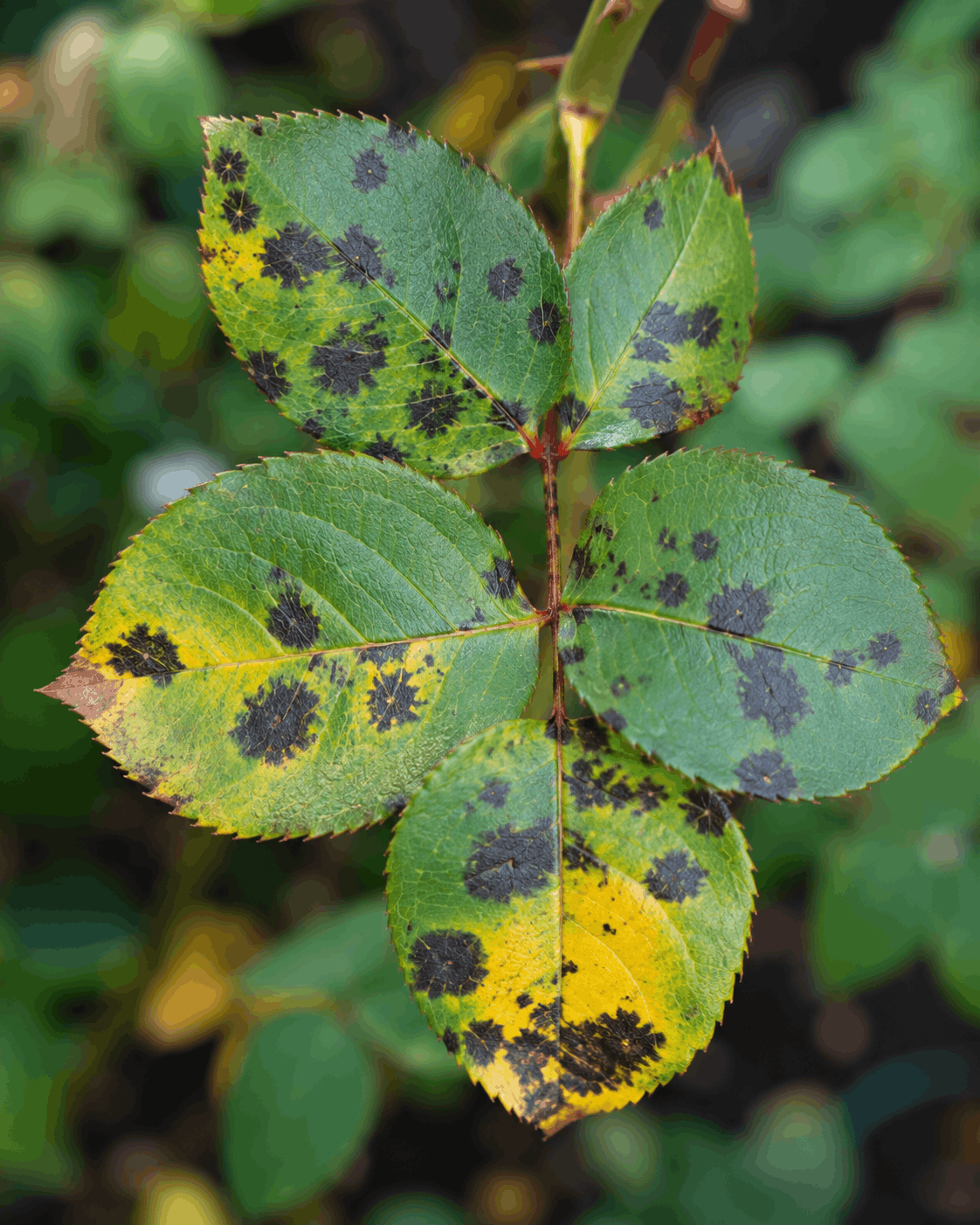


Good autumn hygiene is the single most effective form of prevention. Pick off and bin any leaves showing signs of disease, and rake up and remove fallen leaves from around the base of the plant rather than composting them, since the spores can survive and carry disease over to next year. Pruning to create an open, uncrowded foundation improves air circulation, helping foliage dry quickly after rain and making it harder for fungal spores to take hold. Spacing roses well when planting, watering at the base rather than over the leaves, and choosing disease-resistant varieties all reduce problems in future seasons. If infection has been severe, a preventative fungicide spray in early spring, once new leaves emerge, can help protect the fresh growth.
With tidying, sensible pruning, mulching and good disease hygiene, your roses will weather the winter well and reward you with healthy, colourful growth next year.
