
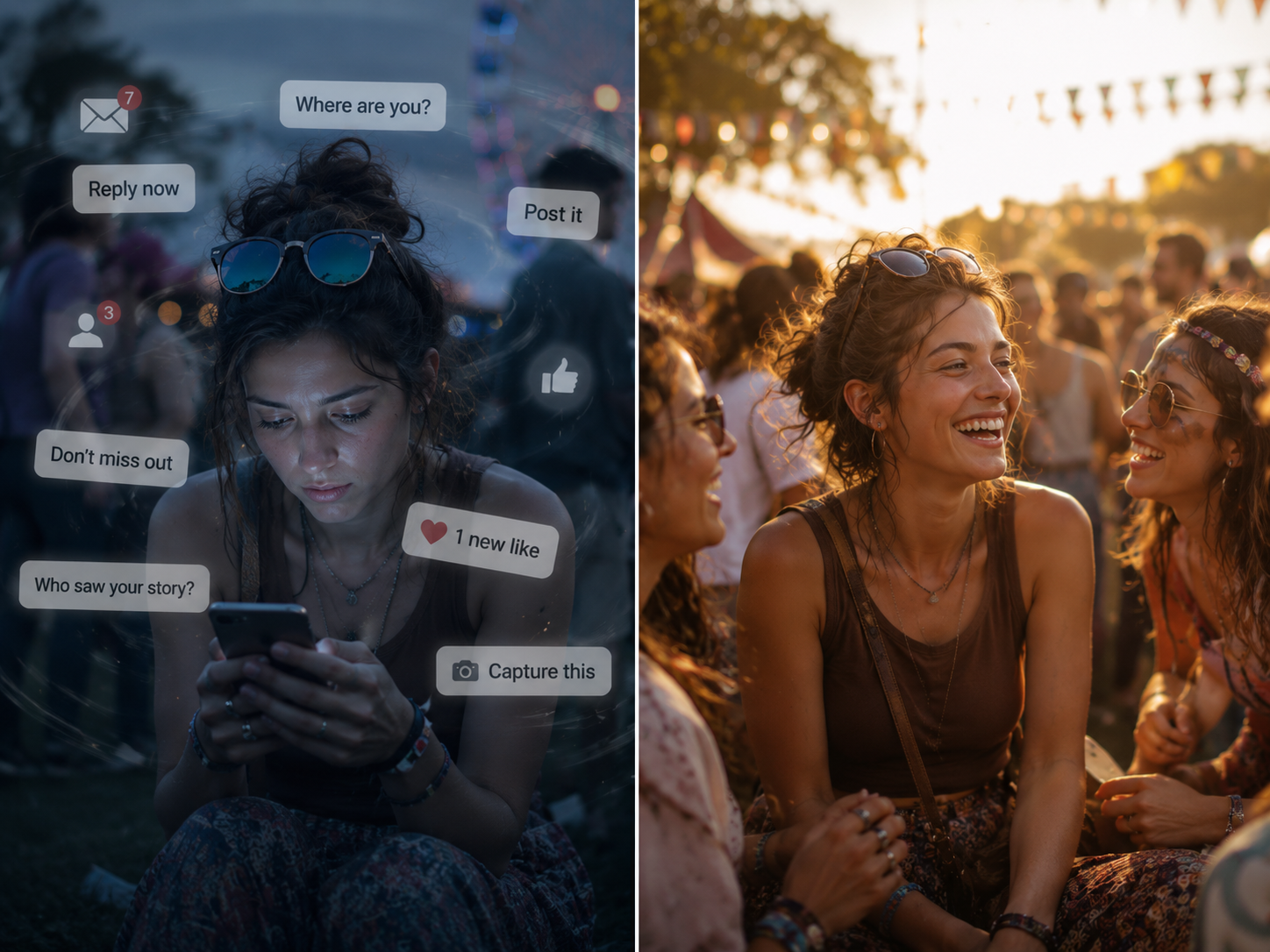
Some of the biggest changes in modern life have not arrived loudly. They have arrived as habits. The small habits we repeat so often no longer feel like choices: checking, scrolling, refreshing, documenting, comparing. Social media has slipped so naturally into the structure of everyday life that it can seem harmless, even invisible. In many ways, it has expanded our world. It keeps us connected, informed, entertained and in touch with lives far beyond our own. But it has also changed something quieter and more personal: our relationship with attention.
Don’t get me wrong - there is real value in social media. It gives people space to express them selves, share ideas, promote their work and feel less alone. But its effect is not always obvious enough to notice straight away. More often, it works quietly, training us to fill every pause, respond to every impulse and move quickly from one thought to the next. Over time, that can leave us less comfortable with stillness and less able to stay fully inside the moment we are actually living.
I notice this in ordinary moments. I go to my phone to check one message, and suddenly, twenty minutes have passed. I open an app without really deciding to. I reach for my phone in the few seconds before anything has the chance to feel still - in a queue, in a lift, during an advert break, or while waiting for someone. Sometimes I am not even looking for anything. It is just a habit. Just reflex. Just a learned response to silence. That is what makes it so easy to overlook. It does not always feel harmful. It often just feels normal.
But when something becomes that constant, it starts shaping the way we live, without asking for permission. It affects what we notice, how long we can focus, how deeply we listen, and how present we are in our own experiences. One of the biggest losses is not always time itself, but the presence, the feeling of fully being somewhere, instead of slightly outside it.
And when presence is reduced, fulfilment often follows. A moment can look good, sound good, and even be well shared, yet still feel strangely thin when it is over. Not because it was not meaningful, but because part of us was never fully there for it. Attention is what gives an experience depth. It is what allows a conversation to land, a walk to calm you, or an evening with friends to actually stay with you afterwards.
Summer makes this even more noticeable. It is the season people wait for: longer evenings, warmer air, holidays, pub gardens, walks, festivals, weekends that feel lighter. It is meant to be a time when we feel more alive. Yet it is also the season that tempts us to capture everything. The sunny table. The drinks. The outfit. The view. The perfect clip. Before we know it, we can end up half-living and half-documenting, splitting the moment in two.
I have caught myself doing exactly that - stepping outside an experience, before it has even finished, to film it, post it or compare it. Becoming aware of that was my first step to a change. It helped me understand why, after some experiences, I did not always feel fulfilled. At times, I was more focused on preserving the moment than actually living it.
So I started making small changes. If I am out somewhere special, I might take a few photos or videos at the beginning, just enough to keep the memory, and then I put my phone away. If I am doing a chore I do not want to do, I put my phone on Do Not Disturb and leave it out of sight until I finish. If I am reading, meeting a friend or at the gym, I try to remove the temptation altogether. I remind myself that life is first and my phone is second.
That shift in mentality has changed me more than I expected. I feel calmer, more focused and more connected to myself. I enjoy things more deeply, and I remember them better. Even simple moments feel fuller when I stop interrupting them.
This summer, the challenge is simple: resist the urge to turn every good moment into content. Let some memories belong only to you. Take the photo, then put your phone away. Go for a walk without checking it. Sit outside without filling the silence. Journal a memory at the end of the day instead of posting it in the moment. Small choices like these may seem insignificant, but they begin to restore something valuable.
A meaningful life is not measured by how visible it is, but by how fully it is lived. The challenge is not choosing between online and offline, but learning how to remain present in both. As William James wrote, “My experience is what I agree to attend to.” The next time your attention drifts, catch yourself. Keep doing it, and you may begin to notice how much fuller life feels when you are actually in it.
