
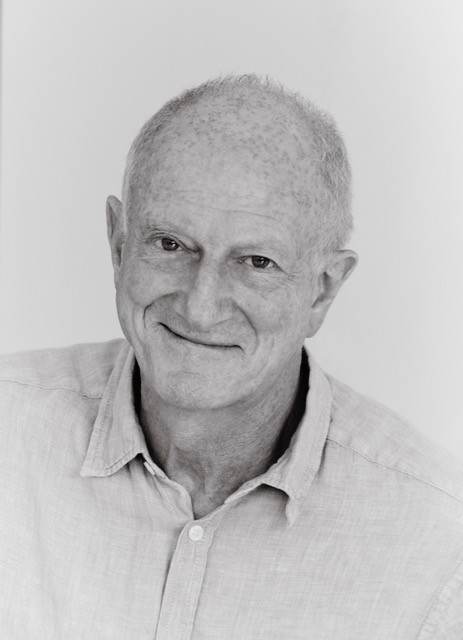
Can you tell us how your path into architecture began?
I was supposed to go to Cambridge to study medicine—specifically to be a surgeon. But that changed after a climbing trip I organised when I was just 17 or 18, I borrowed my mother’s car and crashed. I was concussed, cut my lip, and when I got home, they told me the car was a write-off. But I looked at it and thought, “No, I can fix that.” And I did. Fixing that car felt incredibly satisfying. Much more so than trying to learn all the unknowns in biology and medicine.
At that point, I realised I didn’t want to study what we barely understood—I wanted to make things. That eventually led me to the AA School of Architecture in London.
What was your early career like—how did you get started professionally?
I got started young—by 25, maybe even earlier, I was working on large-scale housing projects. One of the first was in the Borough of Merton, South London. The government had promised an unrealistic number of houses—something like 500,000 a year—and local authorities had made their own inflated pledges. Merton had promised 2,000 and had built just five.
So they advertised for architects, and three brilliant colleagues and I applied together. To everyone’s surprise, they hired us. We were told to build blocks of flats, but we pushed for townhouses instead. People want homes, not towers. We figured out how to make that work by integrating garages into the houses themselves, saving land, increasing density, and creating a lovely community. That became the Pollards Hill development. It worked so well that we got another site shortly after and built another thousand houses. That was the beginning.
Which projects stand out to you as particularly meaningful or innovative?
Parsons House stands out. It was a council tower block in Westminster with serious problems with the windows. Flats were cold and leaking. We didn’t just replace the windows—we wrapped the whole building in insulation, like an overcoat. That improved the temperature, stopped the drafts, and avoided displacing residents. I even designed a new skin for the building that could be installed using rising platforms, not scaffolding. It kept tenants feeling safe. No UK contractor wanted to do it, so we worked with a Swiss company. It turned into a real success story.
There were others, too. I did a single storey courtyard house in Greenwich with Richard McCormack—exposed brickwork, no window frames, just windows sliding on rails set into the brickwork, so the inside and outside courtyards were treated exactly the same as rooms. Another project was a wooden house, entirely built with pegs—no screws, no bolts. Made of Iroco wood. That one was special.
Building a career is very demanding. How did you balance work with family life?
Balance was everything to me. I always worked from home. We shut the office every August for a month. Took the kids skiing and travelling- I even built a converted Mercedes lorry to drive across Europe, complete with kitchen, bathroom, and bunks. It was never just about work.
I’ve always believed that being a successful architect didn’t mean having the biggest practice or the most employees. I had up to 12 people working for me at one point, but the pressure—cash flow, payroll—was enormous. I enjoyed smaller jobs more. They were more personal, more fun.
Did your children follow you into architecture?
No—and that’s not a regret at all. I encouraged them to do what they truly cared about. One did some wonderful series advertising films while working for Visa, another leads a software team in Boston and San Diego, and the youngest has become a very successful photographer. Architecture is a demanding, sometimes strange profession. I never pushed it on them. I’m glad they followed their own paths.
Any projects that never happened but stayed with you?
Lots. You get planning permission, and it falls through. One in Ealing—10 little houses in a sunken area—never happened. Another was about using compressed straw, Stramit, as a building material. We even went to China to present the concept, but it didn’t take off. Still, they were exciting ideas.
You designed furniture, interiors— even tools. Why?
If I need something, I make it. Chairs, lamps, tables—it’s all part of creating a space that works. I consider myself a designer, not just an architect. I could have been an engineer, maybe, but I love architecture.
When did you move to Chiswick?
We moved about 18 years ago. I didn’t need a five-storey house and a big office anymore. My wife and I searched for the nicest High Street in London and found it here. We wanted a smaller house and something east west facing for morning and afternoon light. We kept the Victorian front of the house intact and added a clean, modern section in the back.
I have done maybe 30 houses around Glebe Estate and most of them have come here to see my house. I always say “If an architect can’t make his house nice, you shouldn’t go to him.”
You’re retiring now. What’s next?
I’ll carry on working, but only on voluntary projects. I don’t want to run a formal practice anymore—too much paperwork, too many forms. But I’ll never stop creating. Right now, I’m designing libraries in Ghana for a charity, and we are doing a lot of travelling within Britain. It’s a fantastic country—we have been to places like Northumberland, Norfolk, hidden spots in London. There’s still so much to explore.
Looking back, do you have any regrets?
No, I don’t. I might have had a more conventionally successful career, but I wouldn’t trade what I had—working from home, raising a family, building things that mattered—for anything. Architecture has been a part of everything, but so have climbing, travelling, and making. That’s what kept me going.
What advice would you give to someone wanting to pursue an architecture career?
My advice to anyone who likes designing and making things is to first of all get the best qualifications you can at school (maths, sciences and art), get a qualification in architecture if you can, as the training is very broad and will help you blag your way into the best designer, studio, firm that you like (with pictures of what you have made in the interim).
Qualifications help with what you will be paid to start with, but after that, enthusiasm, curiosity, and determination are what do the rest.
